
HypnoBirthing - The Mongan Method
what is this program really about?
How mindset, environment, and physiology shape birth

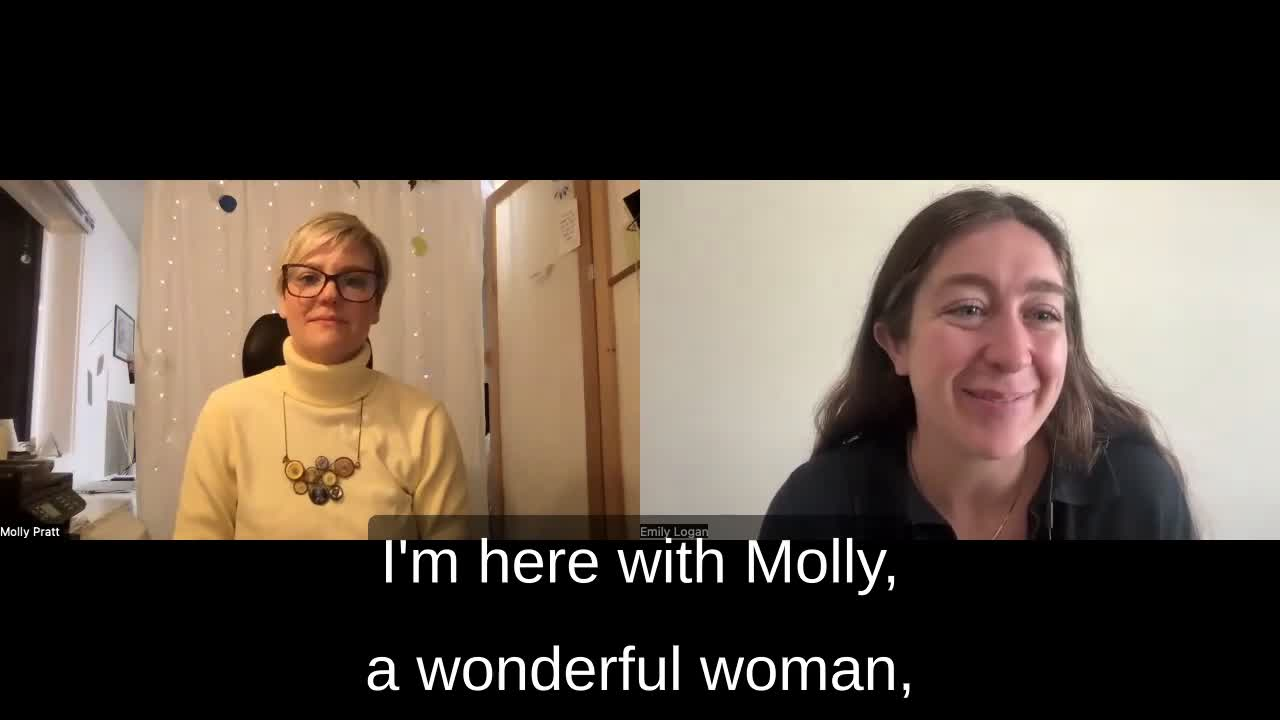
Back in January I sat down with fellow HypnoBirthing Childbirth Educator Emily Logan of Radiant Birth for a conversation about birth preparation, mindset, and what makes the Mongan Method approach to HypnoBirthing® unique.
We covered a lot of ground - from how people first come to HypnoBirthing, to the role of partners, to the ways environment and mindset shape the physiology of birth.
Below you’ll find the full video, followed by some of the key themes that came up in our conversation, which I expand upon if you prefer to read.
here’s the full conversation:
Grab a tea or go for a walk and listen along.
Here are some key themes from our conversation:
~ Theme 1
why many people start looking into HypnoBirthing®
Many parents start looking for prenatal education because they want to feel more confident, more informed, and less afraid going into birth.
For me personally, my journey into HypnoBirthing began with facing my own fears during the birth of my son.
With a background in public health and maternal and child health research, I approached birth preparation the same way I approached many things in my life: by learning as much as possible.
I took multiple courses, read books, listened to podcasts, and explored everything I could about birth and my own personal development.
But at a certain point I realized that knowledge alone wasn’t giving me a sense of calm or confidence.
I was approaching birth from a research mindset - that if I learned enough about it, I would prevent birth trauma. But that my friends, was only reinforcing my fear.
Hypnobirthing and other mindfulness training I did helped me shift that relationship - to slow down, reconnect with my body, and learn to trust the process more deeply.
That experience is what ultimately led me to become an educator. I saw how powerful it is when people begin to put themselves back into their own birth stories.
~ Theme 2
HypnoBirthing® as a whole-person approach to birth
What drew me to want to teach this particular approach (the Mongan Method) was that it seemed to consolidate the months of DIY prep I had done, into five comprehensive weeks.
I love that it supports the full process of birth preparation. More than just breathing techniques or information on medical interventions, it’s
nervous system regulation,
mindset training,
bonding with your partner and baby,
breastfeeding, nutrition and pelvic health
a toolkit of evidence-based tools for supporting the physiology of birth and postpartum,
and a held space for the couple on this unique and transformative journey.
Because birth is not just a physical process, it’s also deeply psychological, emotional, and relational. It brings together the environment, mind, and body - and how to work with all three.
In my work, I’m really committed to help prepare the whole person, not just relay information.
~ Theme 3
the role of the birth partner
Most of the time, it’s the birthing person that first seeks out a birth educator. But the truth is - their body already knows how to birth.
As HypnoBirthing Childbirth Educators, we don’t teach you how to birth, but how to be with birth - and this goes for both the birthing person and their partner or birthing companion.
This is often what surprises people - how central the role of the birth companion is.
Historically, we would have been surrounded by this collective (feminine) support. Friends, family members and midwives who had been with birth over and over for millenia. It was a regular part of life. Their role? To hold the space for birth, to feed, support and prepare the birthing person emotionally, mentally, physically, spiritually, and to tend to birth & family logistics.
Today that collective support is often distilled down to one person: the birth partner.
I often say in my classes, the birthing person’s role is simple, they just need to breathe and be with their process, while the partner’s role is to be the eyes, ears and gatekeeper of the modern birth space.
That’s a big role.
They are integral in supporting the birthing environment and helping the birthing person stay connected to their body and their calm. So building that partnership ahead of time can make a huge difference.
We often think of the birth team as the healthcare providers. But in fact, we need to build the team from the inside out -
starting with the birthing person and their baby,
then the birthing person and their companion,
then the birthing person and their other supports (say, if there’s a doula, educator or other family in the room),
and then the birthing person and their care providers.
If the inner circle is not strong, the circle can collapse. And people often feel lost as a result.
~ Theme 4
why birth stories matter
Birth stories shape our collective understanding of birth. They play a powerful role in how people imagine their own birth experience.
What we see or hear shapes our perception, right? The problem is, most of the birth stories people encounter in media are dramatic or stressful. And without context of why the system is the way it is, we can believe that that’s just the way birth is.
Birth becomes something done to us, versus something that we can actively shape and do.
One of Emily and my favourite parts of the curriculum is watching birth stories with families. They often spur so many interesting conversations. Seeing a wider range of birth experiences can help expand what people believe is possible.
Positive birth stories don’t mean everything goes according to plan or that to have a ‘HypnoBirth’, it needs to look a certain way.
In fact, HypnoBirthing helps people become active participants in their birth story, regardless of how birth unfolds.
What matters most is how people feel during the experience—whether they felt informed, respected, and supported. And that fact is supported in the research.
Research on women’s experiences in the maternity system shows that what corresponds more to a positive birth experience is not what birth looked like, but how a person felt throughout.
~ Theme 5
the environment and the physiology of birth
I often say, HypnoBirthing is childbirth education meets nervous system regulation. Why?
Well, it comes back to our physiology.
One of the ideas we explored in our conversation is the connection between the environment, mind and body. And how the communication network between the three is our nervous system. It’s why I often joke, that
the nervous system is the birthing bone we don’t talk enough about - or the birthing muscle, we really should be training.
Things like lighting, noise levels, tone of voice, who’s in the room, and interruptions all send messages to the body about safety. Because birth hormones are sensitive to stress signals, the environment can influence how labour unfolds.
That’s why we talk about creating supportive environments when possible - dim lighting, quieter voices, fewer interruptions. But the deeper work is learning to maintain a sense of calm internally even when stress shows up in the environment.
And that’s where mindset training - or getting in touch with the landscape of the mind - comes in. This is a central focus in the Mongan Method program.
~ Theme 6
mindset preparation and the subconsious mind
When people hear ‘mindset preparation’, they often think it’s about ‘attitude’ or positive thinking. But it’s more about changing the settings in the mind - working at the deeper structure of the mind in order to influence the neurochemistry of the brain.
This matters, because the body follows the mind.
Changing the neurochemistry of the brain changes the body’s physiology. While we didn’t delve deeply into this topic in our conversation, it’s really the key to understanding hypnobirthing. I’ll talk more about mindset in another post.
You see,
Birth is not something we consciously ‘do’.
It’s largely a process governed by the subconscious mind - similar to sleep and digestion. And like other natural physiological processes, birth functions best when the body feels safe and relaxed.
The tools we layer on in the course - breathwork, visualization, affirmations, and hypnosis - focus on helping people access those deeper layers of the mind and strengthen a ‘return to calm reflex’.
I often describe the course as a five-week mind training ground. You’re practicing again and again - building new neural pathways and learning how to come back to calm even when things feel intense.
Having an understanding about how your own mind and body work and that change is possible, is hugely empowering! But it’s just the tip of the iceberg…
Most people approach goals from a place of willpower. They think, “if I try hard enough, I’ll be able to make it.”
(I mean, that’s the whole idea of capitalism is it not? Effort = Reward.)
But if you want a calm birth, you can’t rely on willpower.
Because willpower is only using the top 5% of your mind’s capacity.
In fact, 95% of our behaviours and reactions, are governed by the subconscious mind and much of the programming stored there comes from negative outside influences we’ve absorbed over time.
So most of our programming is actually quietly holding us back.
It’s why most diets fail or why just knowing how many calories are in a can of soda doesn’t stop most people from drinking it. It’s not about effort or knowledge alone.
Subconscious means exactly that - “sub” - “conscious” - or below our level of conscious control. So if we want to shift how we respond to something like birth, we have to go deeper than just thinking differently.
This is where having a trained practitioner guiding the process live can really be beneficial. It creates a safe container where people can explore and release whatever is getting in their way. We first have to release before retraining the nervous system.
If you want a calm birth, you have to practice being in a calm state.
~ Theme 7
these tools are for birth and life
One of the surprise benefits of the program is that these tools are for far more than just birth. In our chat, Emily shared that while she has yet to give birth, these tools have changed her life. She uses them often for navigating stressful situations in her day to day.
She also shared that she’s had a few Dads reach back out to her to share how useful the Rainbow Relaxation tool and affirmations, in particular, have been beyond birth.
Some dads have used them when flying because they’re nervous flyers and another used it during an MRI. These kinds of stories are really neat to see.
It’s illustrates to me something that I often reflect on. Birth is just a doorway. The hardest part is usually standing at the threshold and then taking that step through. But on the other side is a whole new view of the world and the tools you gained through the journey are what show up again and again throughout life.
~
Theme 8
ultimately, birth is a journey of surrender
You breathe, your body births. The breath is not doing the pushing. The body is. The breath is simply the anchor for the mind. And so the process is largely one of letting go and listening in.
One of the most surprising things people learn going through the program is that hypnobirthing doesn’t add anything that’s not already part of the design. Yes, you heard that right.
What I mean by this is that, physiologically, birth involves entering an altered state of consciousness where the birthing person lets go of the external environment and becomes deeply focused inward. That’s hypnosis.
It’s similar to the process of falling asleep each night. You enter hypnotic states of mind. No one can make you hypnotized, just like no one can make you fall asleep each night. Hypnosis is a process of collaboration and consent.
If hypnosis is a normal physiological part of birthing process, why do you need to take a hypnobirthing class?
The answer is, you don’t.
Through HypnoBirthing, we are simply helping strengthen that pathway into the subconscious birthing state. We’re facilitating the process prenatally so that come birthing day, the birthing person sinks naturally and more deeply into her birthing power.
So yes, physiologically, we are not adding anything new to the process of birth. The challenge we have today is that our modern birth environment is not set up to support physiological birth. So physiological birth without support is often not possible. That support can look many different ways. But support and preparation are necessary.
So HypnoBirthing is not about the breathing techniques, it’s not about the affirmations or the twinkle lights. It’s not even about the choices you make. It’s about the process of making them - not just aligned with information but also with intuition, heart and body.
It’s about learning to surrender to a process you were already built for.
~ Lastly,
HypnoBirthing is about reclaiming agency in birth
If you’re reading this ahead of birth and you take nothing else away from this, I want it to be this:
Your body.
Your baby.
Your birth.
You deserve to take up space in your birth.
You deserve to make choices that feel right for you and your family. Your values, preferences and knowledge about your body and baby areequal parts of evidence-based decision making.
You matter. Your experience matters.
Birth can be beautiful, powerful and sacred rite of passage regardless of how it plays out. Whether it’s 100% medical, 100% physiological or a mix of both, it’s a birth. And it’s yours. Don’t be afraid to lean in. To reclaim that space for yourself.